Affiliate Disclosure: This post contains affiliate links. When you purchase through these links, we may earn a small commission at no additional cost to you. This helps support the site's research and upkeep.
Fountain Pen Converter Not Filling? Beginner Fix Guide (No Mess Workflow)
"My converter won't fill" is one of the most common beginner frustration loops in fountain pens. The good news is that most cases are not defective pens. They come from a small set of repeatable causes: shallow dip depth, trapped air, incomplete converter seating, or unprimed feed. This guide gives you a step-by-step, low-mess workflow so you can diagnose fast and write normally.
Quick Rescue Kit: Use These Before Buying Another Pen

Pilot Users: Start Here
Most beginner “it will not fill” cases are mismatch, trapped air, or shallow nib depth during filling.
Check Option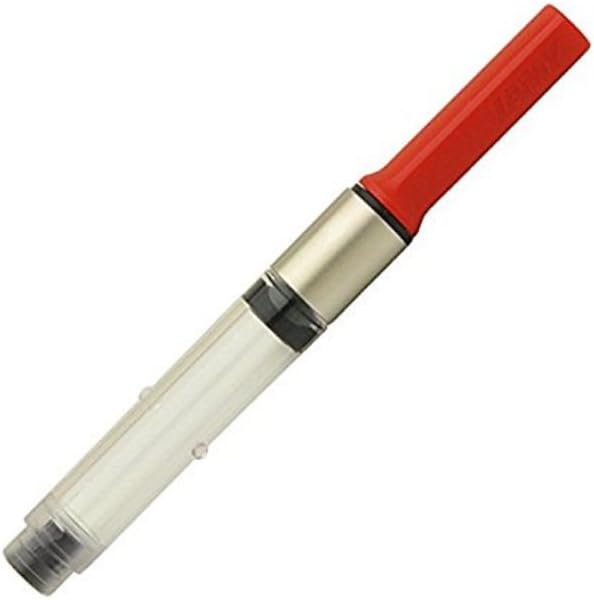
Lamy Users: Stable Baseline
A correctly seated converter removes one of the biggest leak and no-flow variables.
Check Option
Clean Fill Control
A syringe helps prime stubborn converters and removes guesswork when diagnosing feed vs converter issues.
Check OptionRoot-Cause Table: Match Symptom to First Fix
| What You See | Likely Cause | Low-Risk First Fix |
|---|---|---|
| Piston turns but converter stays mostly empty | Nib is not fully submerged, or trapped air dominates the chamber | Submerge breather area, fill once, expel, and refill slowly. |
| Converter looks full but pen writes dry after 3-5 lines | Feed not primed, bubble lock near converter mouth, or poor section seal | Prime 1-2 drops into feed and reseat converter firmly. |
| Ink only appears around nib slit, not in converter | Capillary pickup is happening but piston cycle is too short/fast | Run slower full-stroke cycles and keep nib deeper in ink. |
| Works once, then repeatedly fails on refill day | Converter wear, micro-crack, or lubrication drift in piston seal | Swap in a known-good converter and compare behavior before deeper nib work. |
Method Comparison: Which Fill Style Fits Your Patience Level?
| Method | Mess Risk | Learning Curve | Capacity | Best For |
|---|---|---|---|---|
| Standard converter fill | Low to medium | Medium | Low to medium | Daily beginners practicing repeatable habits |
| Syringe-assisted converter fill | Low | Low to medium | Medium | Troubleshooting trapped air and priming feed quickly |
| Refilled cartridge with syringe | Medium | Medium | Medium | Pilot users who dislike CON-40 fill quirks |
| Built-in piston or vacuum pen | Medium | Medium to high | High | Writers who want fewer refills and can clean on schedule |
Troubleshooting Workflow: Before, During, After Filling
Before filling
- • Flush old ink with cool water until clear.
- • Confirm converter is fully seated with no wobble.
- • Roll bottle gently if ink sat for weeks; do not shake aggressively.
During filling
- • Submerge nib and feed deeper than you think, not just the tip.
- • Turn piston slowly through full travel, then expel and refill once.
- • Pause 3-5 seconds after fill so bubbles can settle upward.
After filling
- • Prime one drop into feed if first lines are dry.
- • Wipe section threads and nib shoulder before capping.
- • Write one paragraph test, then recap and retest after 10 minutes.
Practical Pairings That Reduce Failure Frequency
Pilot beginner set with stubborn initial fill
Reliable learning setup if you use slower two-cycle filling and avoid shallow dip depth.
Pen
Check PenTool
Check ToolLamy beginner who wants one clean routine
Firm converter fit and predictable feed behavior reduce random refill failure points.
Pen
Check PenTool
Check ToolFrequent cleaner with recurring bubble lock
Syringe-assisted priming gives immediate signal whether the issue is converter mechanics or feed pathway.
Pen
Check PenTool
Check ToolWhen to Stop Troubleshooting and Replace the Converter
Beginners often spend too long adjusting technique when the hardware is already worn out. If your converter keeps failing across multiple inks and a second pen, replacement is usually cheaper than repeated frustration. A good rule: if the same issue repeats three fill cycles after proper cleaning and deep dip technique, replace the converter first. It is the lowest-cost, highest-signal swap.
Community Signals Behind This Guide
- Reddit trend: repeated "converter not filling" beginner questions (sorted by new)
- Reddit trend: CON-40 and similar converter frustration patterns (sorted by new)
- Fountain Pen Network community troubleshooting archives on converter flow
FAQ
Q: Why does my converter look full but the pen still writes dry?
A: The converter can hold ink while the feed remains air-locked. Prime 1-2 drops and verify section seal before blaming the nib.
Q: Is the converter broken if I need two fill cycles?
A: Not necessarily. Two-cycle filling is normal on many beginner pens because the first pass replaces air and the second pass captures more ink.
Q: Should I switch inks immediately when filling fails once?
A: No. First rule out technique and seating issues. Most first-week failures come from depth, speed, and trapped air rather than bad ink.
Q: Is syringe filling cheating for beginners?
A: No. It is a controlled diagnostic method. If syringe fill works but piston fill does not, you have isolated a converter-technique problem.
Q: When should I replace the converter instead of troubleshooting more?
A: Replace when you see repeat failures across inks and pens, loose seating, piston slip, or visible cracks around the mouth.