Affiliate Disclosure: This post contains affiliate links. When you purchase through these links, we may earn a small commission at no additional cost to you. This helps support our testing and keeps our recommendations honest and independent.
Fountain Pen Airplane Travel Guide for Beginners: How to Prevent Leaks Before, During, and After Flights
Flying with a fountain pen is usually safe, but beginners often combine the three highest-risk conditions: a half-filled pen, random bag orientation, and no containment backup. The result is not dramatic “explosion,” but annoying cap splatter, inky fingers, or a pen that feels unreliable right when you need it. This guide gives you a clear decision framework for before flight, during transit, and after landing.
Quick Beginner Picks for Flight Days
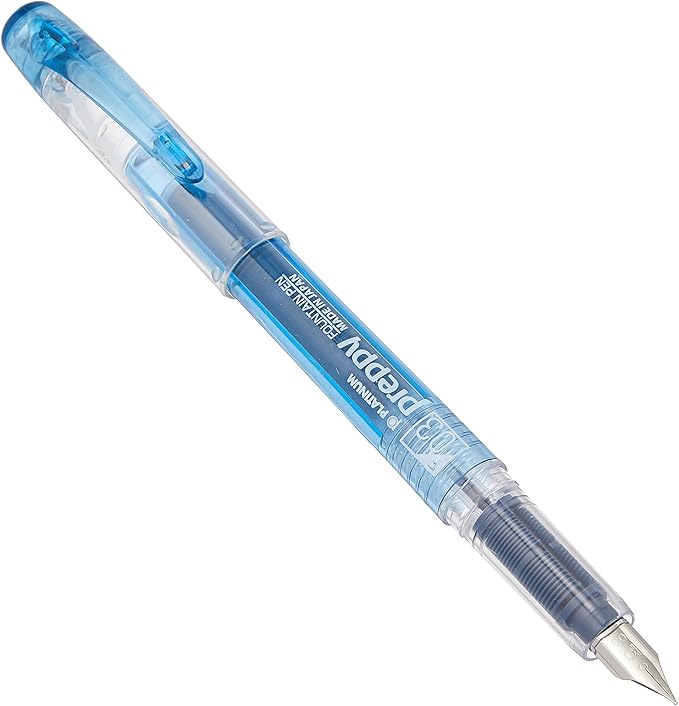
Lowest-Risk Flight Pen
Slip & Seal cap and low replacement cost make it the easiest beginner travel baseline.
Check Option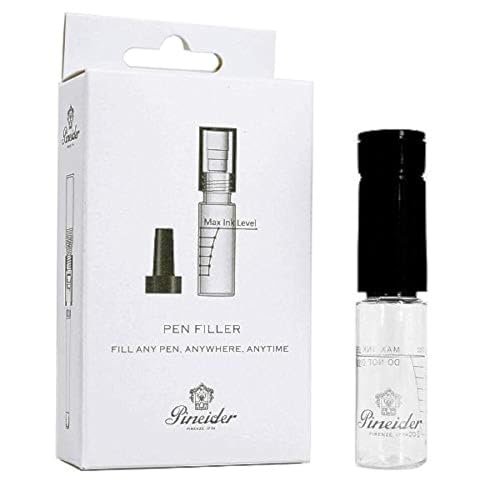
Cleaner Hotel Refill Tool
Helps reduce bottle-tip accidents when you need to refill away from your desk.
Check Option
Containment Backup
A cheap second layer that keeps one leak from ruining your laptop sleeve or notebook.
Check OptionWhy Pens Leak on Planes (and Why Advice Feels Contradictory)
Cabin pressure changes mostly affect the air pocket inside your pen. If more air is trapped behind ink, that expanding air can push extra ink toward the nib and cap. This is why beginners hear opposite advice: some people say “always empty,” others say “always full.” Both can work when executed correctly. The common failure mode is carrying a partially filled pen loosely in a backpack pocket and writing immediately after opening it.
The practical goal is not theoretical perfection. The goal is to reduce pressure-driven ink movement and contain mess if one pen misbehaves. With that framing, flight safety becomes a checklist problem, not a mystery.
3 Travel Myths That Waste Beginner Time
“If my pen is full, it will always explode on a plane.”
Reality: A completely full pen usually has less air to expand than a half-filled pen. Half-full pens often leak more.
“Any fountain pen is unsafe for flights.”
Reality: Most pens travel fine when capped tightly, carried nib-up, and isolated from fast temperature swings.
“I should tighten everything as hard as possible.”
Reality: Over-tightening can damage threads and seals. Firm, normal closure is safer than force.
Travel Setup Comparison: Choose Your Risk Level
If you treat flights as one more commute day, you can usually avoid problems. Use this table to pick your mode before packing.
| Travel Mode | Leak Risk | Prep Work | Main Tradeoff |
|---|---|---|---|
| Cartridge pen, nib-up | Low | Very low | Limited color options |
| Converter pen, full fill, nib-up | Low to medium | Medium | Needs cleaner handling and reseating checks |
| Half-filled pen in random bag pocket | High | Low | Most likely to create cap splatter and grip mess |
| Vacuum filler with shut-off valve closed | Low | Medium | Beginner learning curve for valve use |
48-Hour Pre-Flight Checklist
The best time to prevent leaks is before you leave home. Do this list once and you can usually avoid emergency fixes in the terminal.
- • Choose one pen you already trust instead of a brand-new pen on travel day.
- • Check cap closure and section threading under bright light for cracks or cross-threading.
- • Avoid leaving the pen half-filled. Either fill it fully or carry it empty and refill later.
- • Pack pen nib-up in a dedicated sleeve or vertical pocket.
- • Put pen(s) in a freezer bag as a low-cost containment backup.
- • Keep one tissue and one spare cartridge in the same pouch for quick recovery.
Troubleshooting Branches During and After Travel
If your pen misbehaves, do not switch ink, pen, and paper at once. Use one branch at a time so the root cause is visible.
Ink appears in cap after landing
Likely cause: Air expansion pushed excess ink into feed during ascent/descent
What to do now: Wipe nib + section, hold nib-down over tissue briefly, then test on scrap paper before normal notes.
Grip section feels wet mid-flight
Likely cause: Loose converter/cartridge seating plus pressure or movement
What to do now: Stop writing, reseat cartridge/converter after landing, and store nib-up until confirmed stable.
No dramatic leak, but pen hard-starts after travel
Likely cause: Dry-out from long idle time, not pressure leak
What to do now: Prime with a few gentle strokes, then flush if hard starts continue beyond one page.
What Beginners Should Not Do on Flight Days
- Do not test a brand-new pen for the first time at the airport.
- Do not fill to random mid-level and toss the pen sideways in a packed bag.
- Do not open the pen and start writing immediately after a long descent without a quick tissue test.
- Do not force-section parts tighter than normal; thread damage creates future leak points.
- Do not carry multiple wet pens without containment if electronics share the same compartment.
Community Signal Snapshot
This guide prioritizes recurring beginner questions from public pen communities where flight anxiety and leak stories keep repeating. We focus on practical prevention and branch-based troubleshooting because “just don’t use fountain pens on planes” is low-quality advice.
- Reddit: recurrent beginner concern about cabin pressure and leaks (2025–2026)
- Reddit thread cluster: nib-up carry and fill-level confusion on flights
- Fountain Pen Network: long-running travel leakage troubleshooting patterns
FAQ
Q: Should I fly with pens empty, full, or half-full?
A: Avoid half-full when possible. Full leaves less air to expand. Empty is safest if you can refill later. Half-full often causes the most unpredictable pressure behavior.
Q: Is checked luggage safer than carry-on?
A: Carry-on is usually better because you can keep pens upright and avoid rough handling. Checked luggage can see bigger temperature swings and impact.
Q: Do I need a vacuum filler with shut-off valve to fly safely?
A: No. It helps, but a simple cartridge pen carried nib-up with good cap seal is already very reliable for most beginners.
Q: Can I refill on the plane?
A: It is possible but not ideal for beginners. Cabin movement and limited space increase spill risk. Refill before departure or after arrival when stable.
Q: What is the fastest post-flight recovery routine?
A: Uncap over tissue, wipe nib/section, test a few lines, then continue. If flow is unstable, flush at your destination and refill with one reliable ink.